
Since I started Dr. Write-Aid Consulting, I’ve been thinking about how to price my services. The value of service, education, and labor is a strong theme in my research and publications, as well as within my own experiences working in education and customer service. More recently, my experiences buying makeup in Japan made me think about the similarities and differences between a beauty consultation and a writing consultation.

I’ve always believed that the value of buying high-end makeup is getting a trained staff member to help you understand your beauty goals, find products for you, and help you apply the products. Frankly, a beauty consultation and a writing consultation are similar in that they are both selling you an experience and service from a skilled professional.
A few months ago, while I was on my first trip to Japan in six years, I planned to buy a foundation and brow pencil at a department store makeup counter. Upon seeing me look at the product testers, a beauty advisor staff asked if I was looking for anything. After I told her that I was looking for a brow pencil and a foundation, she gently directed me to sit down at one of the beauty stations. She stored my bags, helped me put on an apron to prevent makeup from getting on my clothes, and started asking me some questions about the type of foundation I was looking for, and so on. After we decided which foundation to swatch, the advisor pulled out a brochure showing a color chart of the shades and identified a few that she thought would be suitable.
My beauty advisor pulled out the foundation bottles, asked me for permission to remove the makeup I was wearing to try on the foundation, and proceeded to cleanse my face with an oil cleanser. After removing my “old” makeup, she applied skincare and gave me a brief facial massage that felt so good I nearly fell asleep in the chair. And then we started swatching foundations, chose the brow pencil colors, and then she applied the brow pencil on both eyebrows. All in all, the whole consultation from sit down to finishing the purchase probably took about 20 minutes. The advisor was nice and friendly, and she did a great job shade-matching and applying the products on me.
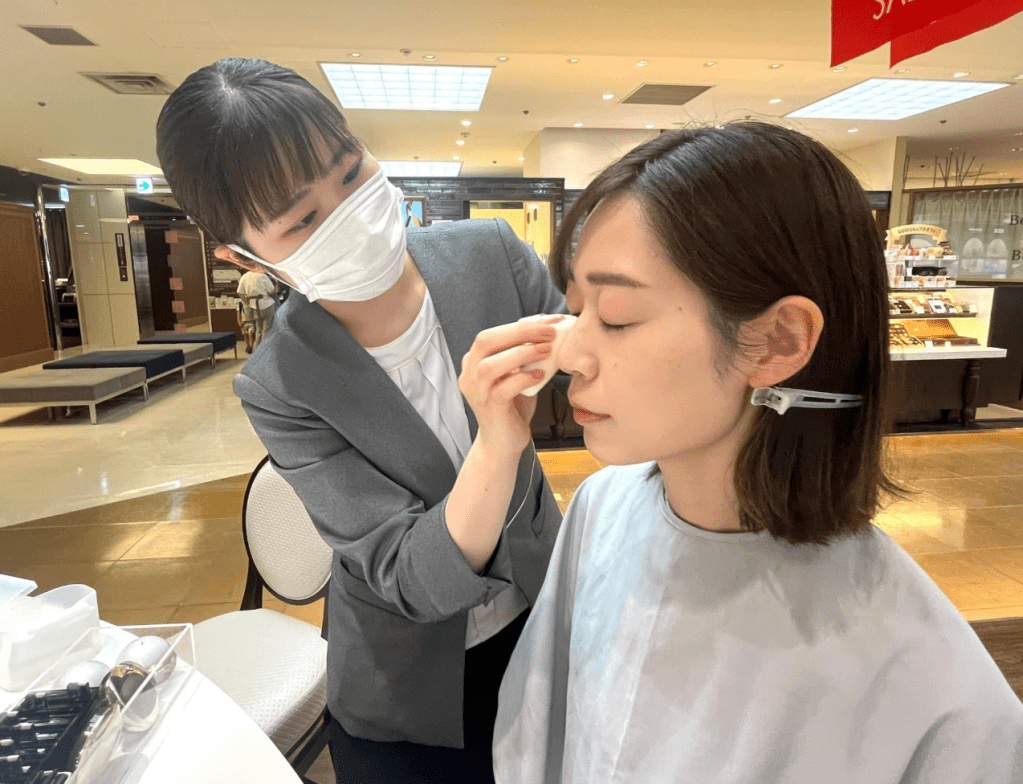
The labor of beauty advisors and related staff involves a combination of technical expertise, a sensitivity to taste and style, product knowledge, emotional labor, and customer service. Sure, there are virtual “try it on” applications for online makeup shopping, in which you upload your own photo or use your phone camera to see a superimposed image of the makeup swatch on your face. But nothing compares to you swatching a foundation in person with some feedback from a professional.
I’ve worked to provide both beauty consultations and writing consultations, and they’re both similar in that I am selling an experience. While a beauty consultation usually sells the customer a product, the true value in getting a professional to assist you in product application and recommendation is the education and personalization. The beauty advisor or staff learns your needs, finds a product based on your goals, applies the product for you, and teaches you how to use it. The value in getting a consultation is the value in getting a personalized experience and service from start to finish.
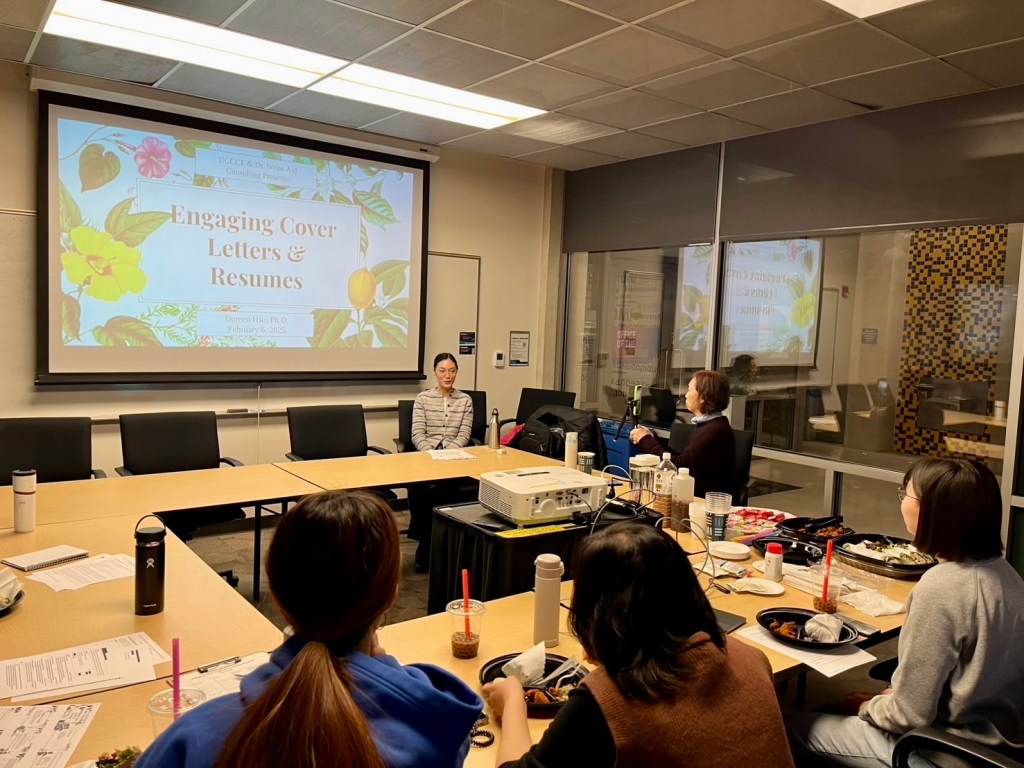
As an academic consultant, I sell the experience of a writing consultation from start to finish. I respond to client questions, book and schedule appointments, take notes during and after the consultation, and of course, give advice and concrete strategies during the consultation. If a client books a feedback session with me, I also read their writing in advance and send them comments prior to our consultation appointment. I suppose I sell “products” in the sense that I provide clients with a toolkit of personalized strategies for their writing projects, and they can always draw from the notes and feedback I write for them. The value here, of course, is the value in getting personalized feedback, education, and service on any writing project.
If we value this type of educational service and skillset, how do we put a price on it? I’ve seen academic and career consulting services at prices from USD$30 an hour to $500 an hour. I’ve also seen online articles advise consultants to price their rates at three-times their hourly rate at their previous or current job. At the university writing center where I previously worked, graduate writing consultants were generally paid at around USD$33-43 an hour. So three times $33 is around $99 an hour, which I suppose makes sense since employers provide benefits that are typically not included in a freelance consulting job.
I believe any small business owner is free to set their own prices, and I’ve struggled to decide on how I should price my consultations. The types of consultations that I provide usually entail supporting graduate students, faculty, and working professionals in completing their dissertations, academic papers, job applications, and so on. This type of educational service requires highly specific and often technical skillsets and knowledge around topics like academia, academic writing, the teaching of academic writing across disciples and cultures, and generally an empathetic understanding of the lifecycle of a writer. My Ph.D. and experiences across different disciplines and cultures equips me with these skills to help writers of all backgrounds, so I also consider valuing my expertise.
I don’t know if consumers know what is included in the prices of products or services they purchase, and frankly, the current debates around American tariffs on imported goods show that many of us don’t know where our products come from either. But, these are things I think about when I price my services: taxes, licensing fees, marketing, and related supplies. I also spend substantial time and labor scaling up my business, such as writing marketing copy, filming social media content, and producing digital marketing content. Self-employment tax is pretty high (about 15%), too.
Of course I could price my services cheaper, but I have had enough of labor being invisibilized and devalued. I’ve published on the invisible labor of graduate students in teaching, mentoring, and community service, and I strongly believe in ensuring labor is acknowledged institutionally through compensation and titles.
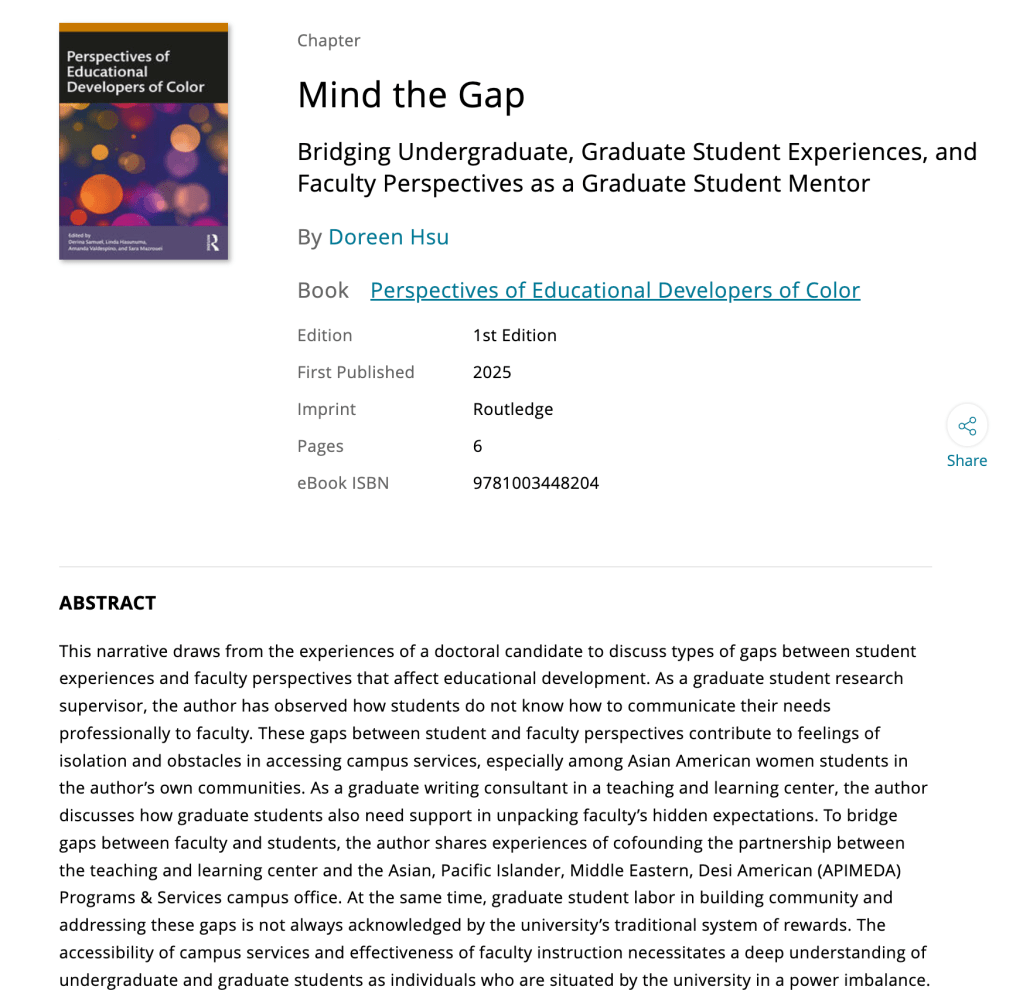
The consequences of invisible and devalued labor is severe for workers themselves and reverberates among consumers. For example, the debates around fast fashion seem like symptoms of decades of invisibilized, devalued labor of textile workers. Even when people know that fast fashion is produced on the foundations of exploitative labor and environment practices, consumers face far more incentives in not caring. Namely, the cheap price of clothes, as fashion writer Derek Guy (menswear guy on Twitter) details viral Twitter debates around justifying shopping for cheap clothes from Shein. Consider also the price of manicures, as this 2015 New York Times article shows the labor exploitation of nail salon workers.

I return to my question: if we value skilled labor, how do we price it? If we price service and products cheaply, does that mean we don’t value service and labor?
A client once shared with me that my consultations feel like a premium service, but not a luxury. While the definition of luxury differs across many individuals (I fully understand some people might think my services are a luxury), I don’t want most people to think that I’m a luxury provider. Thus, the goal is to communicate to people what’s included behind my rates and ensure transparency, such that people can understand why I price my services in this way. I adjust my pricing based on the types of projects and the client’s current stage of writing, so that there is no one-price-fits-all. I also like to do free writing consultation giveaways (I’m doing one soon!) and I hope that people can consider these opportunities as well. Overall, I suppose there’s no easy or short answer on how to price service, but I continue to think about the value of labor and to remain transparent about my values.
I would be curious to know if others have thoughts to add, and please feel free to let me know in the comments.
Also, I’m starting a new giveaway next week to celebrate (?) back to school for everyone who wished they got more writing done this summer. Keep an eye out for an announcement on this blog, my Instagram, TikTok, or Facebook!

In my last blog post, I mentioned I would be writing my roundup of research and productivity tools, but I suppose these ideas around labor took the forefront. So I’ll be writing about that next. I used to have a long list of research tools written up on my old personal website, and I figured it’s about time I updated and compiled everything. Please let me know if you have any recommendations for research software, citations, or productivity apps!
Thanks for reading!
 Dr. Write-Aid
Leave a comment